
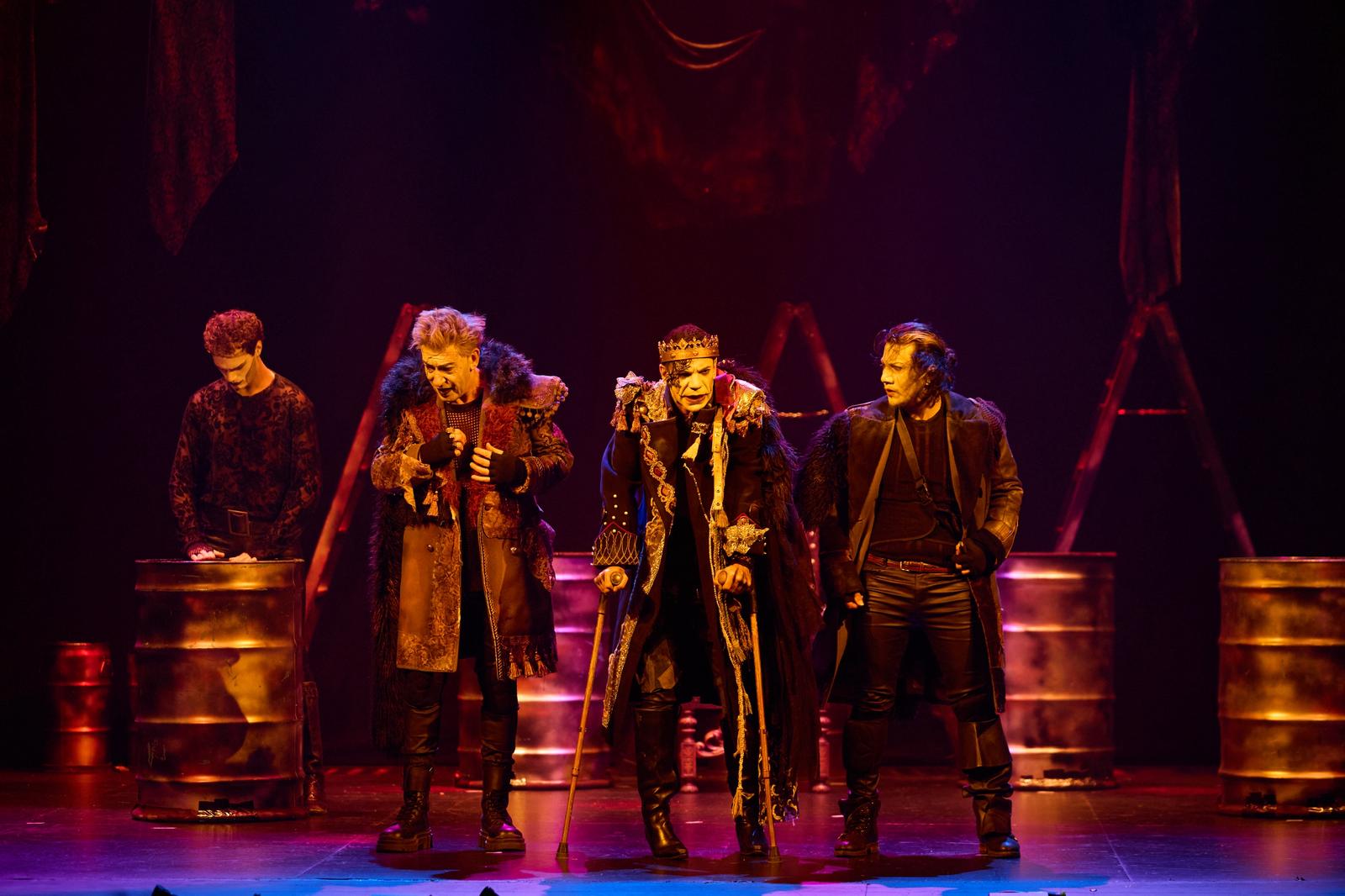
A bold new reimagining of Shakespeare’s Richard III comes to London’s Cockpit Theatre. Director and star Nicolás Perez Costa tells The Theatre Playbook about bringing this acclaimed production to London, playing in the round and how live percussion helps to bring the performances alive.
Argentine theatre-maker Nicolás Perez Costa brings his bold, dystopian reimagining of Shakespeare’s Richard III to London’s Cockpit Theatre.
Directed by and starring Costa, the physically driven reinterpretation of Shakespeare’s notorious King Richard III places the audience directly inside a brutal and decaying universe where power is fought through bodies, rhythm, and violence.
The play was previously performed at Madrid’s Teatro Infanta Isabel, where it later transferred to a larger venue.
Alongside Costa, Hugo Coello will be reprising the role of Hastings which he first performed in the Madrid production. The international cast also includes Marta Carvalho as Queen Elizabeth, Tricia Hitchcock as Buckingham, Juliet Prew as Queen Margaret, Mathew Miles as King Edward and Lord Stanley, Julia Rose Lisa as Lady Anne and Lord Grey, Tom Longmire as Clarence, Oliver Broad as Lord Rivers, Nabhan Uddin as Tyrell and Germán Martins as Catesby.
Often described as Shakespeare’s greatest villain, Richard III charts the ruthless rise and brief reign of the controversial Plantagenet king. This contemporary staging explores themes of power, ambition and manipulation through a highly physical theatrical language, creating a fresh perspective on a character who continues to fascinate both historians and theatre audiences alike.
An Argentine actor, director, playwright and acting coach based in Madrid, Costa is known for his inventive stagings of classical and contemporary works, having directed more than 100 productions across Argentina and Spain. His recent directing credits include Dos Tronos, Dos Reinas by Pepe Cibrián and Sade, una velada incómoda.
Here, Costa introduces The Theatre Playbook to his take on Richard III, why playing the monarch is the completion of a lifelong dream and his thoughts on directing the cast – and himself.
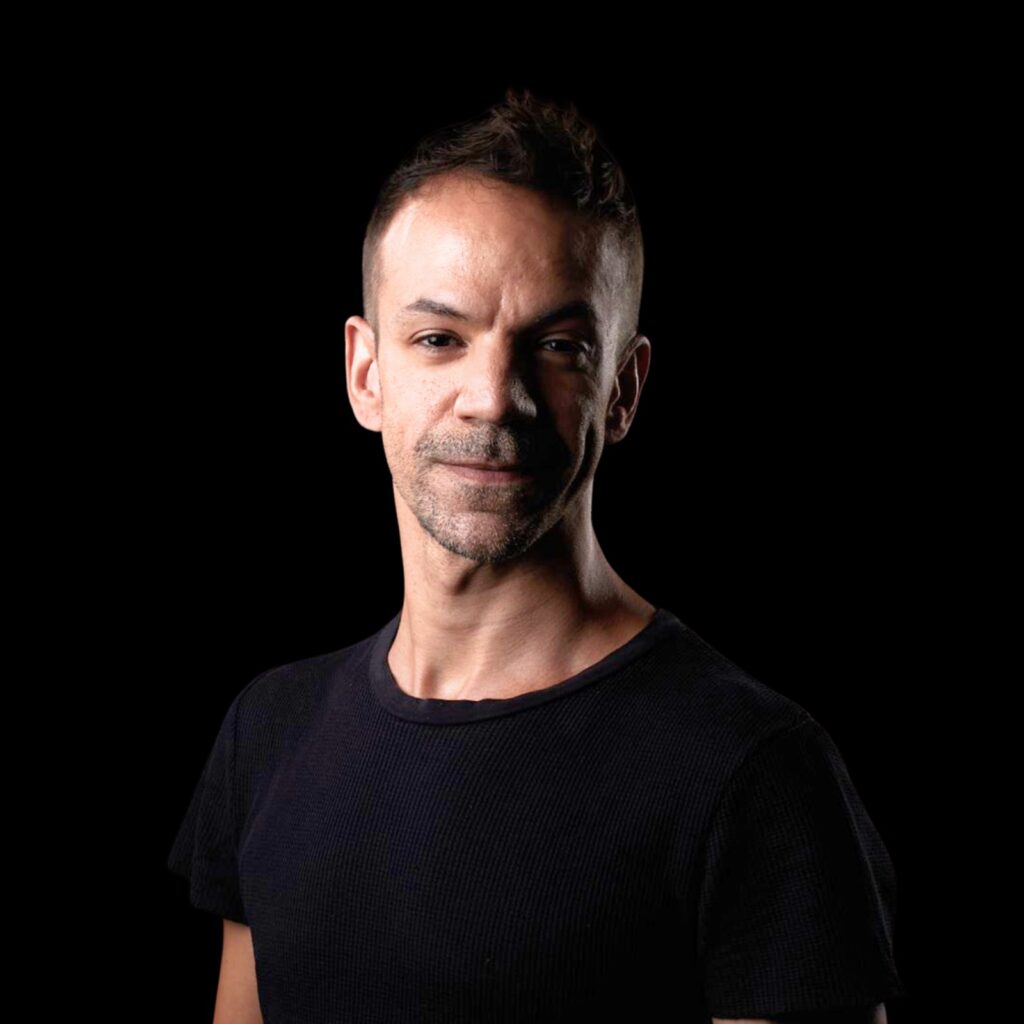
What does it mean to bring Richard III to London?
Bringing Richard III to London means entering, respectfully, as a guest into a home where both the playwright and the play form part of the cultural memory of its audience, something that fills me with a profound sense of responsibility. I am enormously grateful for the welcome and respect shown by the cast I am directing. This process fills me with pride and also with that happy nervousness artists feel when approaching an important event: a mixture of excitement, gratitude and responsibility.
What was your interest in this particular Shakespeare play and why did you want to bring it to the stage?
My interest in this play comes, first of all, from Shakespeare’s idea that evil manifests itself as a deformity in human morphology, a notion that also appears in other of his plays. As an actor, this is especially stimulating because I consider the body to be the fundamental vehicle through which the audience not only understands, but also perceives what is being represented on stage. In that sense, Richard III seemed to me a fascinating play.
On the other hand, in the times we are living through, speaking about unrestrained ambition, abuse of power, evil and social resentment, and placing them on stage as a mirror of our contemporary reality, is always, at the very least, deeply interesting.
How would you describe your interpretation of the title character and the events of the story?
I have always believed that empathy is the starting point an actor should have when portraying any character, even when dealing with feelings or actions that are extreme, questionable or controversial.
I believe that social and emotional resentment can lead people to deform what they might have been and turn them into brutal versions of themselves. My Richard is, in that sense, a monster born out of resentment, but he is also a brilliant politician, a victim turned victimiser, a manipulator and, at the same time, a deeply human being.
Through this play I am interested in telling the story of the struggle for power and of how someone unable to fit within the social standards of a particular time manages to shift the axis of everything that is happening in order to become, for the first time, the centre of the action.
What themes did you want to explore?
I wanted to build a dystopian universe in which the play and its characters inhabit an anachronistic world, a kind of parallel reality or dimension to the one in which the original action takes place. This space could be both an undesirable future and an underground world born out of excessive ambition and political disorder.
I was interested in imagining characters who are internally corrupted, trying to survive in a degraded environment, aware that there is a better reality on the surface which they cannot access.
I also wanted to explore live percussion as an element of sonic depth, capable of making the audience vibrate and accompanying the brutality of the action through sound.
Were you always going to play Richard III?
At the beginning of my career, driven by a certain ambition to build a serious and prestigious artistic path, I asked myself, when I was around 25 years old, what great character I could immerse myself in to continue that journey. Richard III appeared then as an inevitable possibility.
Today, I am grateful that I did not do it at that time. The maturity required to find a truly personal way of approaching the character arrived almost 20 years later. Being able to play him now also means fulfilling a lifelong desire with the perspective and experience that only time can provide.
How did you prepare to play the character?
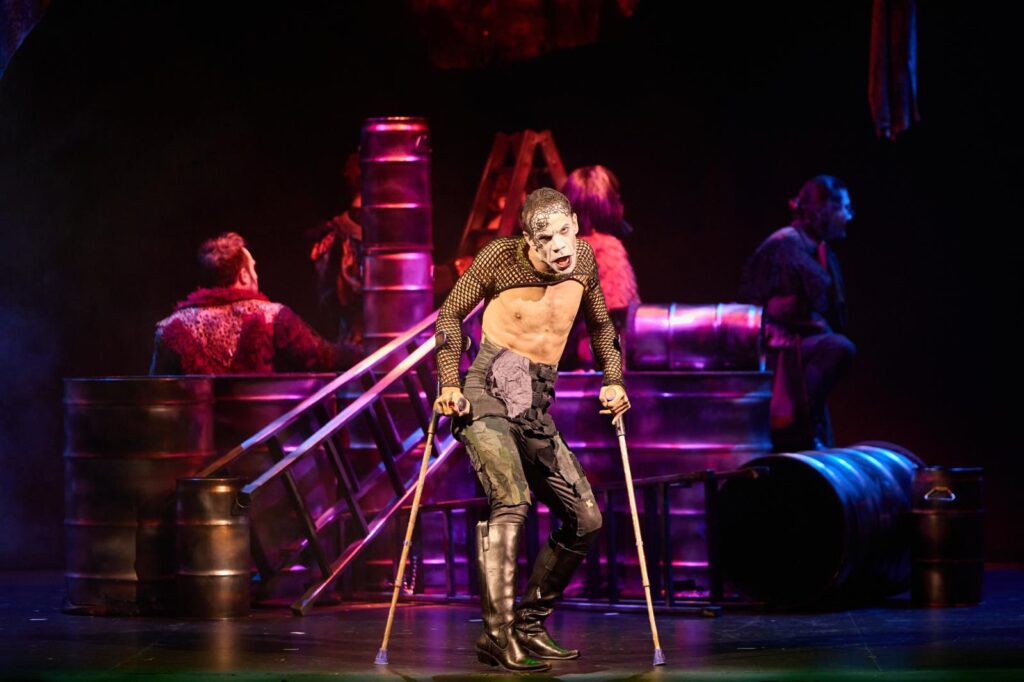
I worked virtually with Rita Terranova, a great Argentine actress and acting coach, investigating the character’s physicality in depth. Together we explored how monstrosity, bad intentions and vulnerability could shape an animalistic, deformed and deeply singular body.
From this process emerged the crutches and a very particular way of moving, elements that ultimately defined much of the character’s composition.
The investigation into Shakespeare’s poetics and original language has been especially enriched through my encounter with the actors performing the play in London. For more than a year now, Richard has occupied a central place in my life and has become the focus of an extraordinarily exciting artistic process.
What was your director’s vision for the production?
As a director, I wanted to approach the play from what has been described here in London as a distinctly Latin perspective. I believe that, as Latin artists, we often experience and express situations in a more visceral way: emotional, intense and deeply passionate.
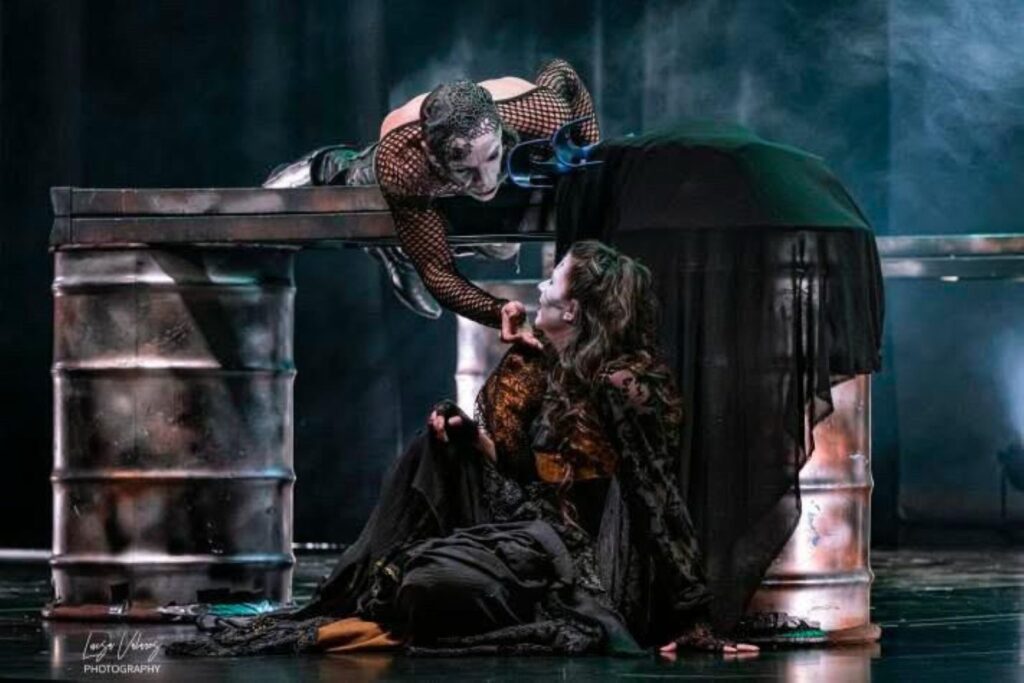
I was interested in creating a sense of urgency in every situation, a world in which events are not only tragic but profoundly emotional. That approach shapes the actors’ bodies and relationships on stage, creating a kind of theatrical puzzle built from the same pieces as Shakespeare’s original play, yet generating a different emotional atmosphere beneath the surface.
How do you like to work with your cast in rehearsals and during a show’s run?
I like actors to feel observed and, therefore, cared for. I believe that the director of a production must be present to accompany, support, solve problems and, when necessary, establish limits. I try to give actors as much freedom as possible to create, while having a very clear sense of the production’s direction and ensuring that the creative process is always collaborative.
I consider the actor to be the centre of the theatrical event and I believe that this centrality must be sustained through responsibility and care. I work fundamentally through the body. I think the body possesses deeper information, less contaminated by preconceived ideas. Whenever possible, I try to silence the mind and allow the body to speak.
How do you enjoy directing yourself?
I often think, with a certain irony, that directing oneself is the experience closest to a kind of bipolarity or, in quotation marks, schizophrenia. It requires inhabiting two very different places simultaneously: that of the actor and that of the director.
Contemporary technology offers valuable tools, such as the possibility of recording oneself, but it also means that insecurity can become central precisely because one is never completely outside the scene. The danger, then, is listening to too many voices.
That is why I consider it essential to surround oneself with people whose judgement one deeply respects. Having good advisers during the process is fundamental, but it is equally important to preserve and trust one’s own intuition.
What can you reveal about the staging and how it is performed in the round?
The in-the-round or thrust format proposes an audience that is increasingly close to fiction. It is an audience that not only observes what the actor decides to show, but can also choose to look in the same way as the actor or the character, creating a more active and personal experience.
At a historical moment in which we are closer to fiction than ever before – because we carry it permanently with us on our phones and live in constant contact with it – theatre offers a different alternative: the possibility of experiencing fiction through direct human encounter. I believe that this kind of staging honours precisely what has always defined theatre: the shared experience between human beings in the same space and at the same time.
What impact does the live percussion have on each performance?
The live percussion accompanies the performers in an organic way. Although the actors are not professional percussionists, they use different sound elements to help create atmospheres, moods and the inner worlds of the characters.
The metallic and deep sounds envelop the audience in a universe where emotion, sound and bodies vibrate simultaneously. Through this sensory experience, we seek to tell a story that everyone already knows in a particular and visceral way, aiming to move the audience and make them travel emotionally alongside us.
The show has already enjoyed considerable acclaim. How has the production evolved during its runs at various venues?
As we know, theatre is a living art form that is completed by the audience at every performance. The evolution of this production has been organic, moving towards greater emotional depth and theatrical intelligence.
On this occasion, the fact that it is being performed by an international and profoundly cosmopolitan cast has added a new dimension to the work. It is fascinating to observe how each of us, from our own cultural background, understands emotionality, dramatic structure and character composition.
All these different approaches are nevertheless united by a common language: theatre itself, the love for this art form, commitment to the audience and the defence of the story we are telling.
What do you hope audiences in London take from the show?
I hope London audiences experience a different kind of evening, one in which an author who has been immensely read, heard and performed can be experienced from a deeply physical and emotional perspective.
The aim of this production is for the actor, as the centre of the theatrical event, to bring to life not only the poetry of the text, but also the dramatic situation, the relevance of its conflicts and the way in which, as human beings, we continue to relate to them.
Above all, I believe that what matters most is what lies beneath: the almost instinctive understanding that one body establishes with another. I hope the audience will not only rationalise the story, but will feel genuinely affected by it.
Richard III plays the Cockpit Theatre from July 8-11, 2026. Tickets here.
Top image: Richard III stage shot (image supplied)