
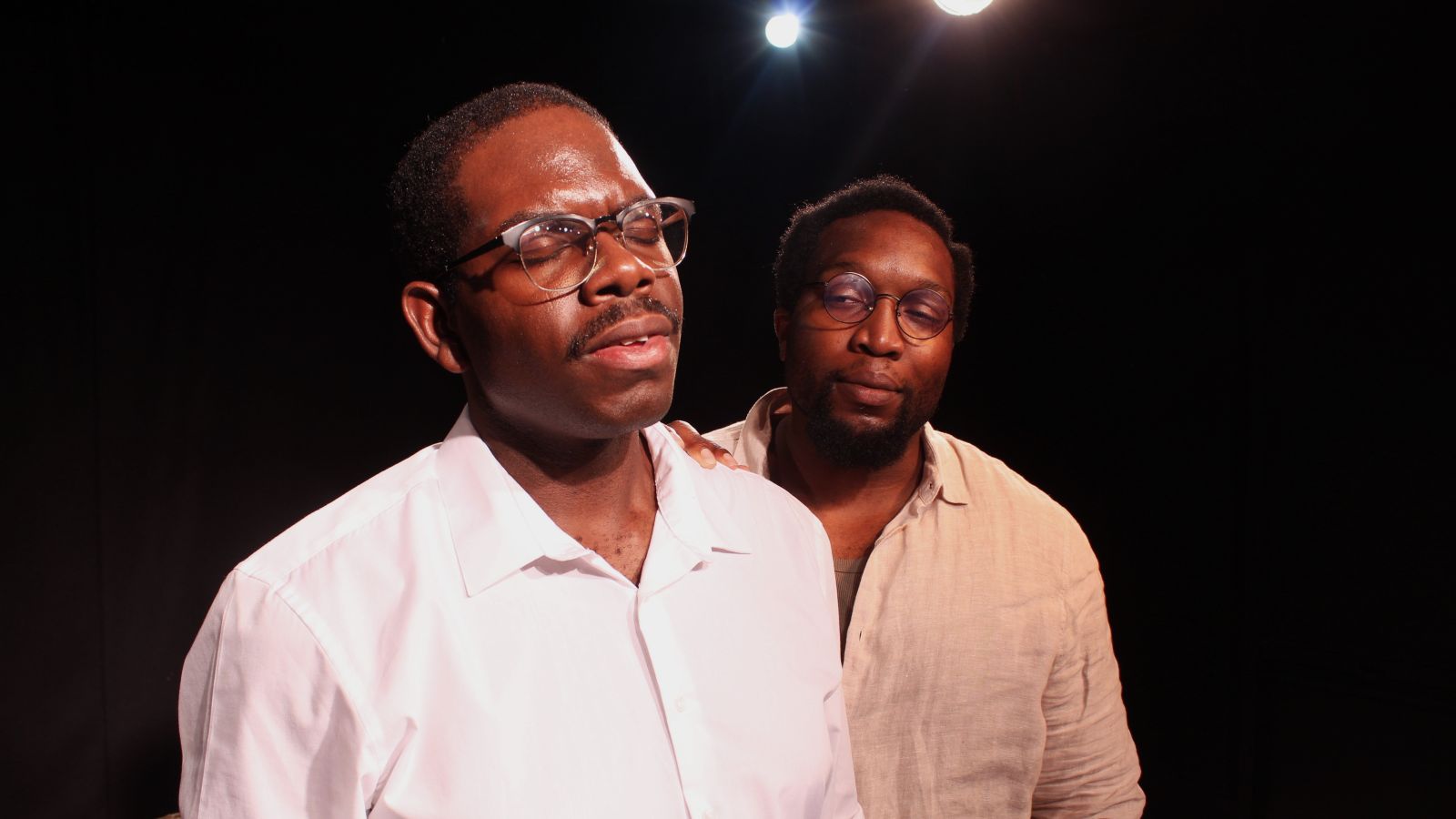
Playwright Emeka Agada speaks to The Theatre Playbook about his debut play, The Last Black Mesiah, which will open at London’s Jack Studio Theatre in London in April 2026.
Emeka Agada is best known as an screen actor with roles in shows such as Reacher, Nurses and Ransom. He’s now set to see his debut play, The Last Black Messiah, take to the stage with a run of performances beginning this month at the Jack Studio Theatre in London.
Directed by Nathaniel Brimmer-Beller, this tense two-hander is set in 1990s America and follows Black revolutionary leader and former Howard University professor Dr Oko, who is awaiting execution when he receives a surprise visit from his former student Asante, now a journalist.
As their reunion unfolds, history, past choices, and the weight of the country collide, igniting a confrontation that could change the legacy of Dr Oko, in a production described as a gripping exploration about revolution, justice and ideology.
Agada also stars as Dr Oko, with Kenneth Butler as Asante.
Meanwhile, Brimmer-Beller also takes charge of sound design, with lighting design by Rey Wong and sound engineer & operator Imran Islam. It is presented by BlackPen Productions & Black Bat Productions.
Here, Agada speaks to The Theatre Playbook about his move to become a writer, creating a two-hander and why the show marks an on-stage reunion between him and Butler.
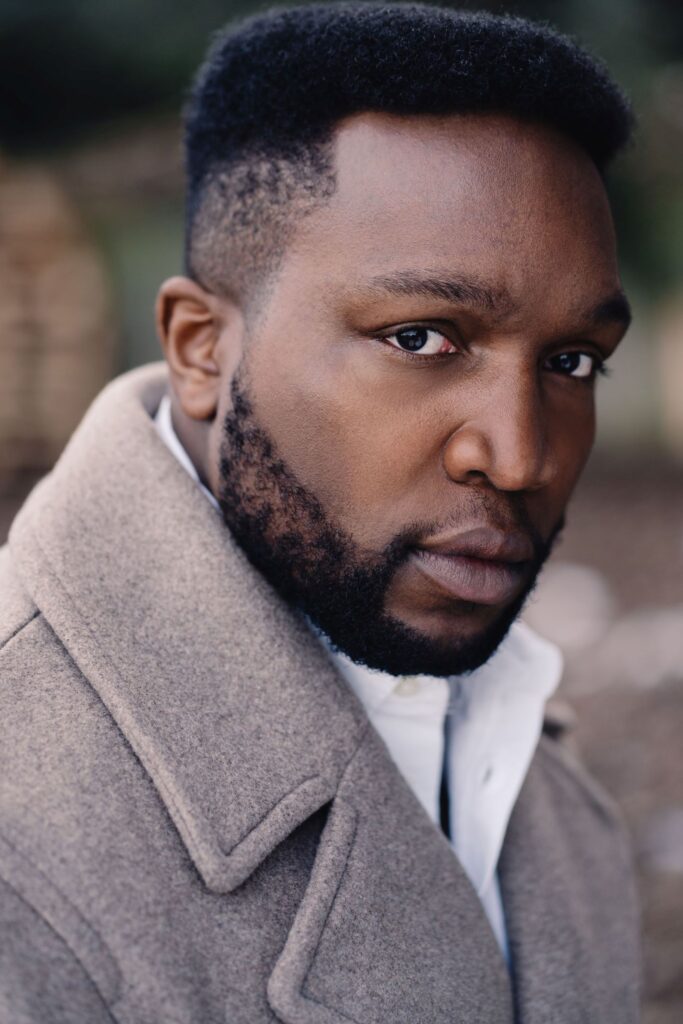
You’re best known for acting on screen. How did you shift into writing?
Theatre is home to me. I’ve always been fascinated with the process of theatre making and telling stories with a live audience. I started in New York as an artist, and writing is a skill that has slowly developed alongside my acting career to keep me sane during dry periods or moments where I felt deeply inspired. I’ve written released and unreleased short films, web series and a feature film script. But I’ve never written a full play until now.
What can you tell us about your debut play, The Last Black Messiah?
This play is best described as a pressure cooker of a piece. It’s tense, it has a lot of shifts and turns that keeps the audience locked in. On the surface, the audience is presented with a very familiar relationship that we can all relate to, a teacher and a former student. Everyone has a favourite teacher, and there is something interesting about reconnecting with that person years later in your life.
Who are the main characters and how do we follow them through the story?
The story follows two main characters: Dr Oko, an ex-professor and revolutionary leader who is on death row, and Asante, a former student of Dr Oko who now works as a journalist. The two of them meet after not seeing each other for years, and it’s their meeting that really sets us off on revisiting Dr Oko’s past and examining the ideology of these two characters.
What are the themes you wanted to discuss, and how do you approach them in the script?
At the heart of this story, this piece explores revolution, identity and power. I think the dialogue and the conflict between the two characters is a great representative of that. Especially for Asante, who guides the audience through these themes. And certainly, you can feel Dr Oko as a character symbolises the history and weight of a community.
The show is a two-hander. Why did you decide to use this format and what challenges did it come with?
I’m a big fan of hard hitting stories that are told by just two actors. It’s not only a great challenge for the actor but for the writer as well. How to do you keep things interesting with just the two of them? I found the big challenge was having to cut out a lot of text. There were some great monologues written that had to go unfortunately.
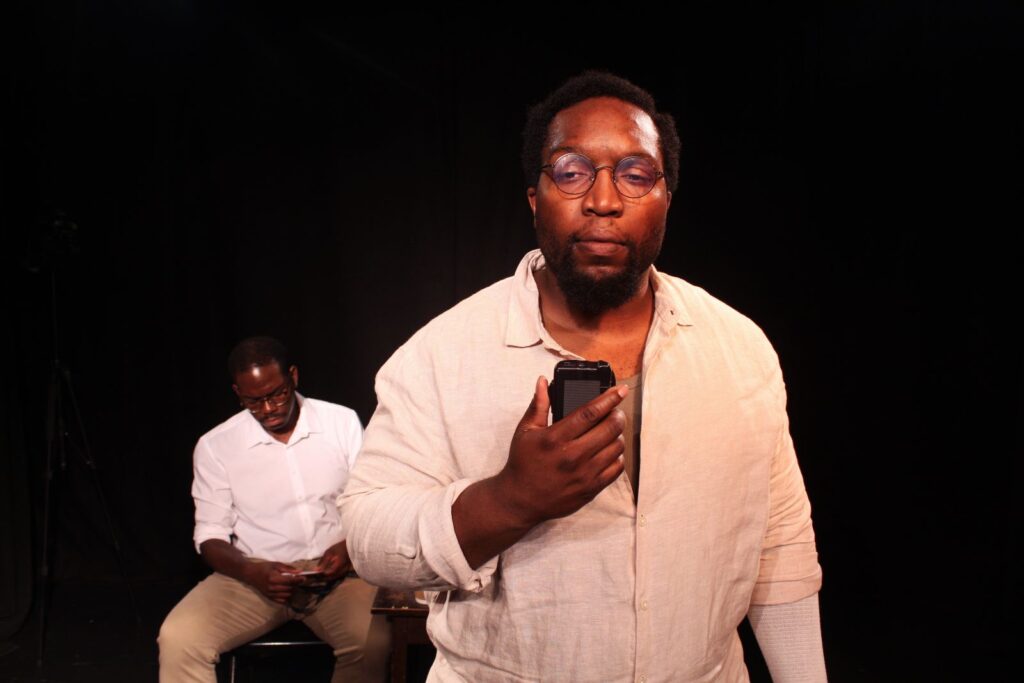
What’s your writing process?
I like to keep it simple. If I have an idea, I’ll usually start writing the characters first and then a story outline to fit them in. This could take days to weeks and months. With this play, it took a bit longer because there was a lot of research that I needed to dig into before completing it.
Who stars in the show and how are you working with them in prep and rehearsals?
I star in this show alongside Kenneth Butler, who recently starred as Martin Luther King on a different production we did together across Europe last month. So we had a chance to discuss things while away, and since this is our second time doing this show again, there is a deep connection that we have with these characters. It also helps that as the writer, I already have a strong understanding of the character’s motivations and themes but I know how to make adjustments to the script or performance when needed.
How did you partner with director Nathaniel Brimmer-Beller, and what can you tell us about how he shaped the show on stage?
I connected with Nathaniel online, when we met, It was clear to me he would be a great fit. Nathaniel has created this cold, stripped back setting to allow the piece to really rest on our shoulders. There is a real thriller, noir quality to it that I think audiences will love.
What can you tell us about the staging at the Jack Studio Theatre?
It’s intimate. The audience will really feel like they’re right on stage with us.
What can audiences expect from the show?
Audiences should expect an evening of rich theatre.
What are you working on next?
I’ve got a project releasing later this year on one of the major streaming platforms which I’m really looking forward to. Most audiences haven’t seen me on screen since Reacher, so I’m excited to share it.
The Last Black Messiah runs from April 28-May 16, 2026. Tickets here.
Top image: The Last Black Messiah (image supplied)