

Camdenwalla writer and director Jonny Khan takes The Theatre Playbook inside this new play, which highlights the real work of the Camden Monitoring Project founded to support the Bengalis community in the 1990s during a period of racist violence in North London.
Camdenwalla, a new play now on at Camden People’s Theatre, is shining a light on an overlooked chapter of London history by telling the story of the Bengali community who refused to be intimidated, and the volunteers who kept each other safe when no one else would.
Set over one night in 1994 inside the Camden Monitoring Project – a community-led organisation founded to document racist violence in North London and provide safe transport home for local Bengali workers facing harassment and attack. Emerging in the shadow of racist murders including Altab Ali, Richard Everitt and Stephen Lawrence, the organisation operated at a time when such violence was routinely ignored, dismissed or underreported by authorities, forcing communities to organise for their own protection. Volunteers answered emergency calls, recorded testimonies, and organised lifts home for those at risk after late-night restaurant shifts, making their work a vital act of protection, solidarity and resistance.
Founded by community activist Nasim Ali, who would later become the UK’s first Bangladeshi and Muslim Mayor, the Camden Monitoring Project played a vital role in supporting Bengali communities across the area. Drawing on archival research and real testimony from local residents, particularly members of Camden’s Drummond Street community, the play brings these lived experiences and overlooked histories to the stage.
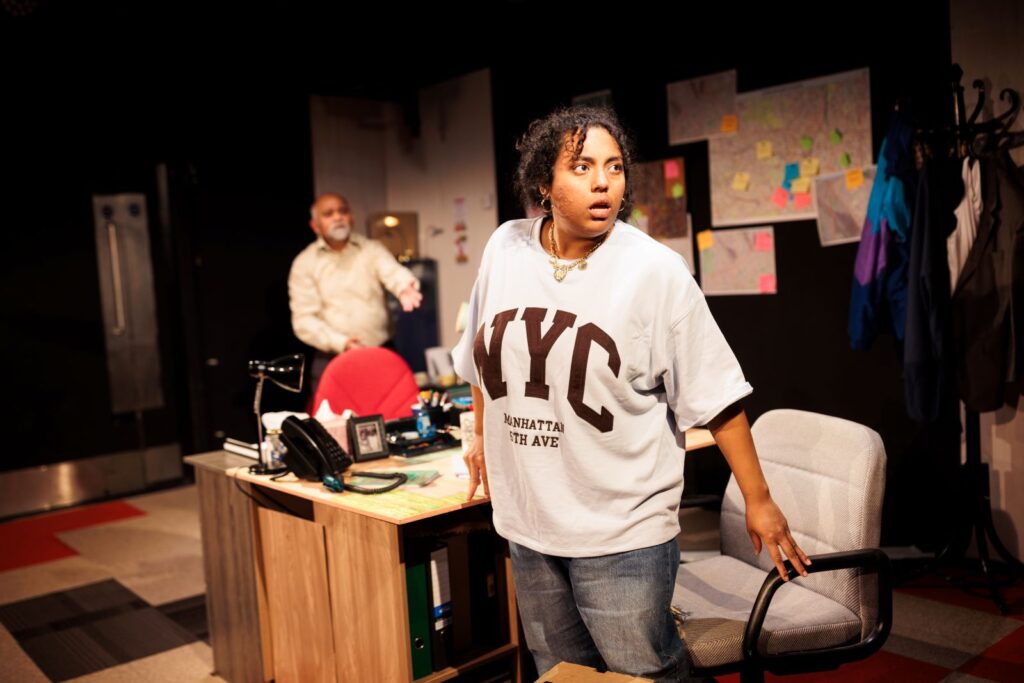
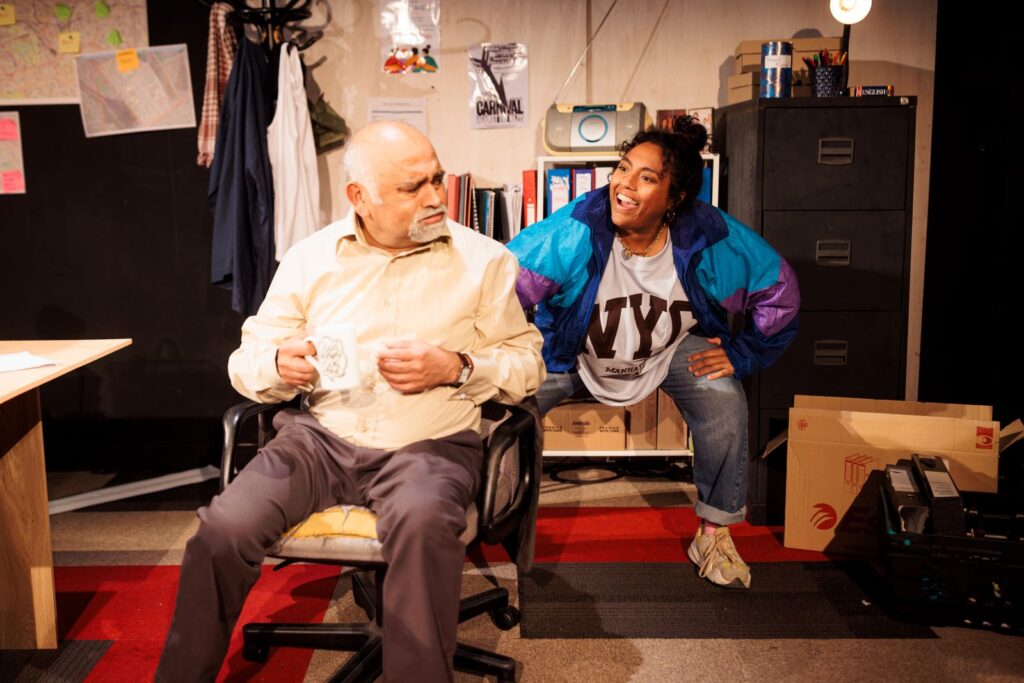
The play follows Muhammad (Bhasker Patel), a first-generation Bangladeshi immigrant volunteering through the night, and Alima (Nusrath Tapadar), a British-Bangladeshi teenager reluctantly drawn into his world. As calls mount and tensions rise, the pair are forced to confront the gulf between generations, competing ideas of activism, and what it means to care for a community under pressure.
Written by Jonny Khan (The Shitheads, A Thousand Splendid Suns), the production is staged at Camden People’s Theatre, which is situated at the same address where the Camden Monitoring Project was once based, transforming a former site of community organising into a space of remembrance, reflection and live performance.
Sam Edmunds is the associate director and producer, and Maariyah Sharjil is the designer.
Here, Khan tells The Theatre Playbook about creating a play based on the real events, his writing and directing process, and the significance of staging the show at the Camden People’s Theatre.
Hi Jonny, please introduce us to the story of Camdenwalla.
Camdenwalla takes place over one night inside the Camden Monitoring Project. Muhammad spends his evenings documenting racist attacks and police inactivity across the borough. When Alima arrives to drop off some food for her uncle, she unexpectedly gets swept into the work of the project. Over the course of the night, both characters are forced to confront what it means to care for their community and what they’re willing to sacrifice for it.

Who are the main characters and how do we follow them through the story?
The play centres on Muhammad and Alima. Muhammad is from an older generation of Bengali immigrants, whilst Alima is a second-generation British Bengali. They come from different worlds, have different interests and very different ideas about politics and activism. But underneath all of that is a deep connection, affection and understanding that develops throughout the night.
What can you tell us about the real events on which the show is based, and the period of British life in which it is set?
The play is inspired by the real Camden Monitoring Project, which was originally set up to support workers travelling to and from work safely after a rise in racist attacks. The organisation also documented police misconduct and challenged institutional failures. What’s remarkable is that it operated from the very building that is now Camden People’s Theatre. I’ve set the play in 1994, just months after the murder of Richard Everitt. At that time, racism was a very visible and very present reality for many people living in the area.
How did you come to stage the show in the same building the real events took place in – and what impact does that add to the production?
It’s incredibly special. To know that the audience are watching this story unfold in the same building where the real organisation once operated gives the play an added weight. Although Camdenwalla is a fictionalised story, being in that space constantly reminds us that these events are rooted in real lives and real experiences.
The story takes place over one night. Why did you decide on this format and how did it affect the pacing and structure of the story?
One night felt like the most exciting dramatic frame. By condensing everything into a single evening, it creates a pressure cooker where the characters can’t avoid each other or avoid difficult conversations. They’re forced to confront themselves, each other and the world around them in real time.
How did you want to explore the show’s themes of generational divides, activism and community?
I was interested in the difference between keeping your head down and getting on with life and saying enough is enough and pushing back. I think many people from my parents’ generation might recognise one approach, whilst younger generations might recognise the other. The play asks how we choose to show our politics and what responsibility we have to the communities around us.
What kind of research did you do in preparation and how was it used in the script?
The process started with conversations. I spoke to Nasim Ali, people working in community centres, restaurant workers on Drummond Street and members of the local community. I also spent a lot of time in archives researching the history of the Camden Monitoring Project and the period. Those conversations and materials became the foundation of the play.
How would you describe your writing process?
It’s taken a long time to work out exactly what I wanted to say. I’ve written countless drafts, many of which looked completely different and had very little to do with the Camden Monitoring Project. Eventually I landed on this version because it felt like the most truthful, surprising and theatrical way of telling the story.
And do you separate the roles of writer and director, or is directing something you’re thinking about as you write the script?
I naturally think in images, so even whilst writing I can often see moments of staging in my head. Directing my own work has been a real learning curve because you’re constantly switching between different instincts. I’ve learnt to trust both processes and not overthink things too much.
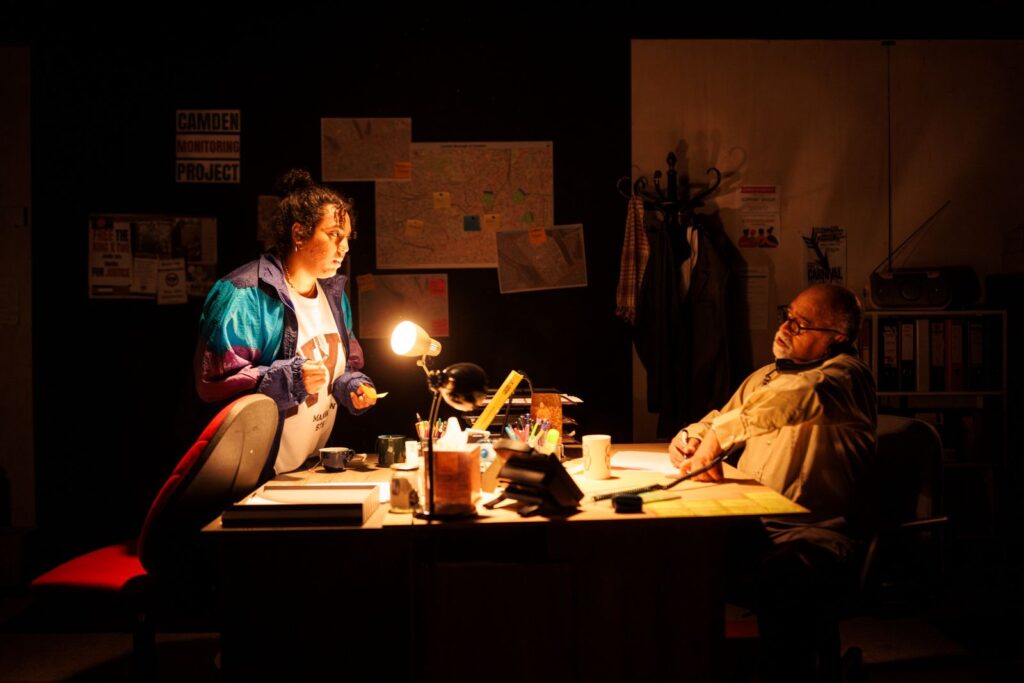
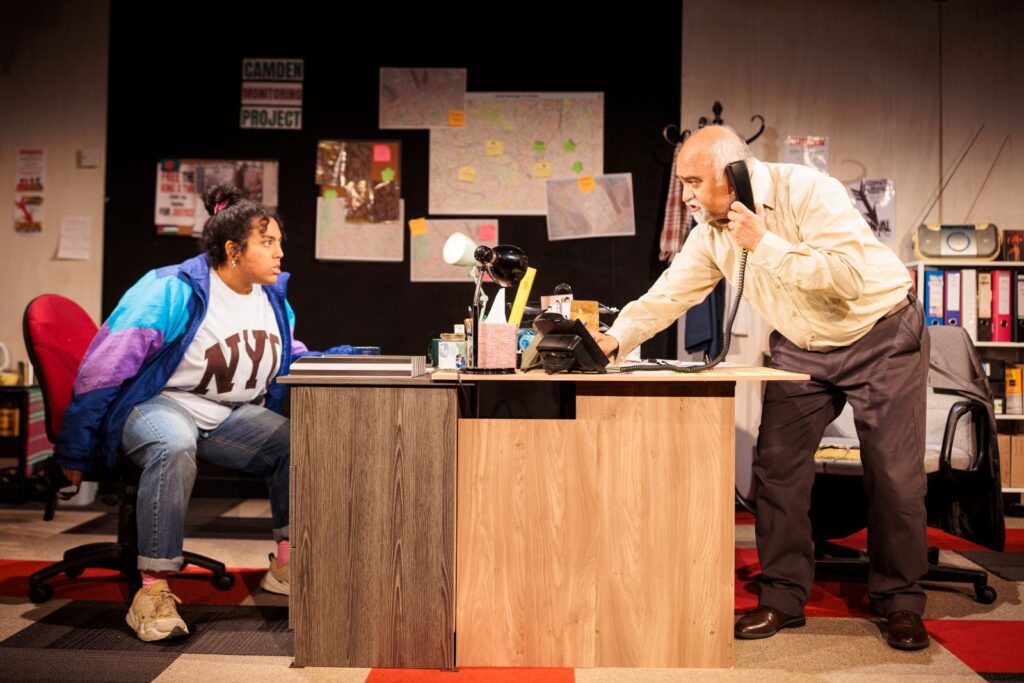
What can you reveal about the staging and how the show is performed?
At its heart, it’s a naturalistic play. But as the evening unfolds, the world of the play begins to expand and transform into something more theatrical. We’re constantly looking for inventive ways to tell the story whilst staying grounded in the characters.
How were rehearsals been with the cast? Is there a way you like to work with actors?
As an actor myself, I love being part of the actors’ process. I know how valuable it is to have space to ask questions, explore and experiment. The play is surprisingly complex logistically, but the company have thrown themselves into it with huge generosity and creativity. Together we’re trying to make the most exciting version of the show possible.
What challenges did you face in the run up to Camdenwalla’s debut?
The biggest challenge has been finding the best way to tell the story. There are so many fascinating aspects of the history and we’ve constantly been asking ourselves how to make the show accessible, engaging and emotionally truthful without losing its complexity.
What are your ambitions for the show, and what might audiences take from it?
I hope audiences leave asking themselves how they show up for their community. Beyond that, I hope people have a genuinely great night at the theatre and discover a piece of Camden’s history that they may never have encountered before.
What are you working on next?
I’m developing a new script for another theatre project and performing in another production later this year. I’m excited to continue exploring storytelling through acting, writing and directing and seeing where those different disciplines take me next.
Camdenwalla is running at Camden People’s Theatre until July 4. Tickets here.
Top image: Camdenwalla artwork (image supplied)