
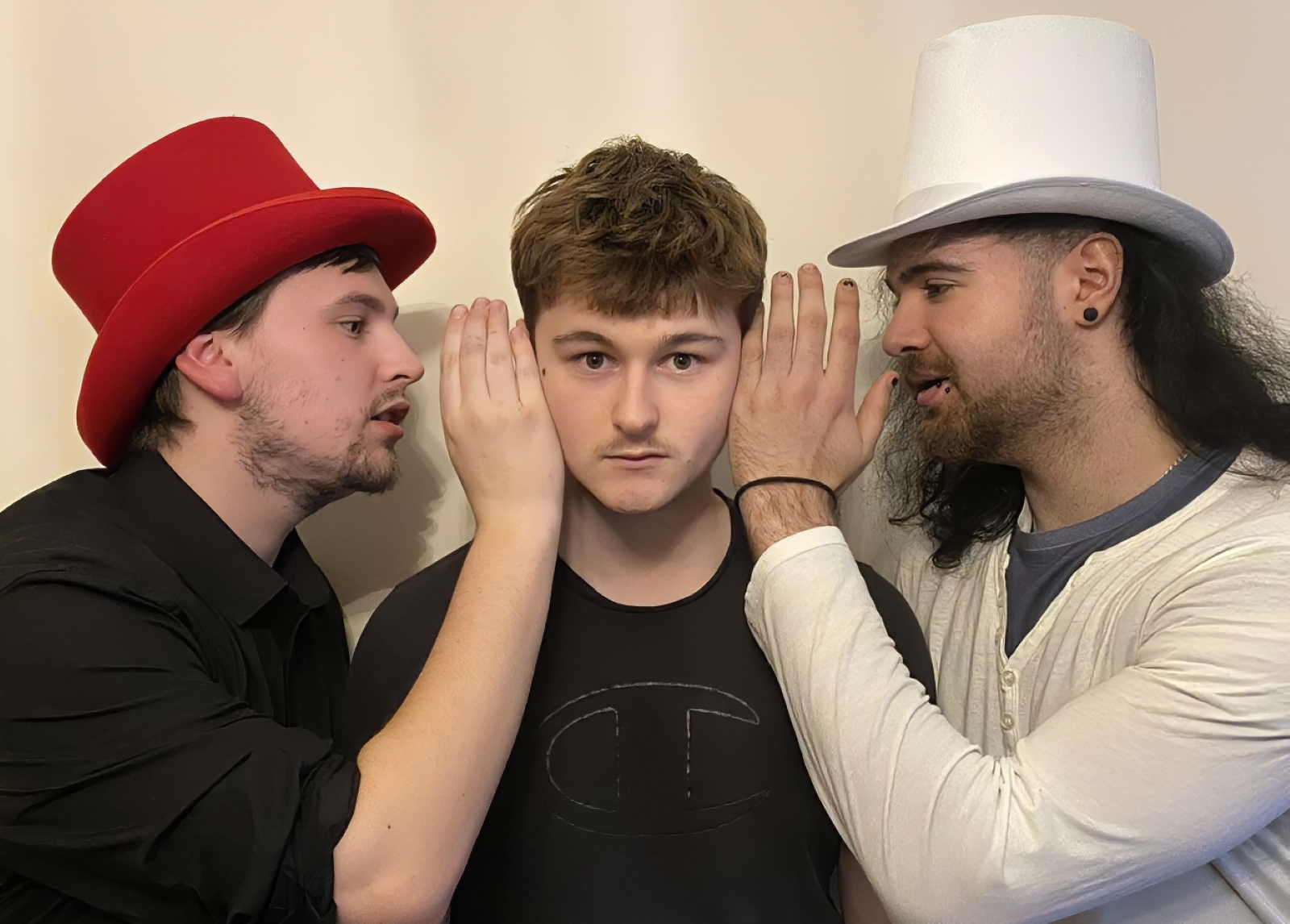
Writer-director Fionnuala Donnelly speaks to The Theatre Playbook about telling this darkly comic story of a teenager torn between God and the Devil, in a play that speaks to the creative’s own battles with mental health.
In God, The Devil & Me, Fionnuala Donnelly has created a surreal, darkly comic dramedy that offers a vivid theatrical look inside the mind of a young person experiencing psychosis
The coming-of-age play follows Gabe, a music-obsessed teen, whose bedroom becomes the battleground for a surreal tug-of-war when God and the Devil slip into his thoughts and begin to take hold of his mind.
At first, for Gabe, the voices seem playful, bantering with one another and demanding his attention. They tell Gabe he is “special” – perhaps even an angel-and reinforce that they are real by revealing details about Gabe’s life he has never shared. But what begins as light-hearted quickly twists into manipulation.
Writer-director Donnelly based the show on their lived experience of being diagnosed with schizoaffective disorder as a teenager. Now the darkly comic play is coming to London’s The Lion & Unicorn Theatre, running from January 6-10, 2026.
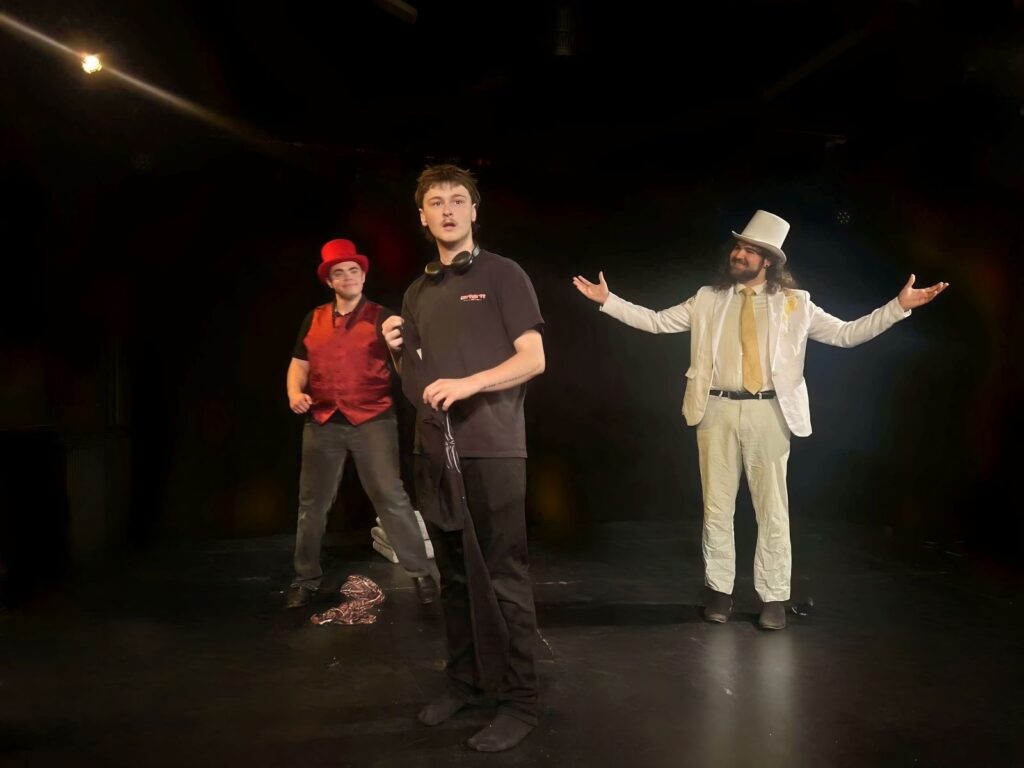
From Tip Top Theatre Collective, God, The Devil and Me is written and directed by Donnelly. They also play the role of Gabe’s mother in the production. God is played by Neo Jelfs, Gabe is played by Noah Edmondson, the devil is played by Campbell Maddox, Sam is played by Miranda McEwen and Hannah is played by May Mead. The show includes audience interaction – so audiences should be prepared to answer to God (option to opt out available).
Here, Donnelly tells The Theatre Playbook more about the show, their writing process and how they found the show’s blend of humour, music and surrealism.
How do we follow Gabe through the story?
For Gabe the play really is quite a rough ride. He’s already struggling with being an average teenager and all that entails – GCSEs, teenage friendships, fighting with his mum and finding out who he is. They say don’t meet your idols – when it comes to God for Gabe that is almost certainly apt. Gabe is on a journey of managing complex relationships with God and the Devil, their bickering, their interference with his relationships and a groundbreaking revelation about who Gabe is and his purpose amongst the divine. Ultimately, the story is about Gabe learning why he turns to God and the Devil and that, in all the noise, the most important lessons may not be grand or world-shaking, but about himself and an ordinary life.
What can you tell us about how God and the Devil both influence and manipulate Gabe?
Well, God and the Devil are definitely trying to be Gabe’s friends, but they have their own agendas. I believe God and the Devil could be good for Gabe, but neither of them can selflessly love someone or put themselves aside. God and the Devil are funny, cool and seemingly have the answers – omniscience and all. They weaponise their status/mythology to their advantage, ruling out confronting or overpowering them – how could a teenage boy fight omnipotence? Overall, what makes them appealing to Gabe is what ultimately makes them terrifying – a huge power imbalance where initially you feel part of an awesome team, but also powerless within it. Their tactics, behaviours and flaws are like most toxic relationships – there’s nothing more real than a friendship that sours and makes you re-evaluate everything.
What are the origins of the production?
The play is based on a psychotic episode I had at 16/17 and was created to humanise psychosis. I find people often struggle understanding psychosis because many components feel far-fetched – people think “I could never believe that.” Like, when people believe they’re Jesus, it can make people frightened of the extremity, but if you say, “I heard a voice tell me I was Jesus and, as a Christian, I knew it was God, so I was compelled to believe it,” people often find it easier to relate. I wanted a resource, but also a creative, engaging piece of theatre. Over the years, many people inspired the types of things that might help people learn, through understanding my condition. The culmination of all of that is God, the Devil and me, basically.
How have you based the show on your experience?
Well, I really did have a psychotic episode at 16/17, around delusions/hallucinations of God and the Devil, that really did see me end up in a psychiatric unit. Hannah is based on people I met there, and my experience with an eating disorder. The mother’s struggle, whilst largely imagined, probably addresses my parents’ frustrations, trying to understand an ill teenager and Sam is most definitely based on school friendships I had. I focused on God and the Devil (even though my delusions/hallucinations went beyond them) as they are incredibly common, especially amongst those who are religious – I was a Christian though my parents are atheist. Ultimately, a lot in this play does not directly reflect my personal experience but, is firmly based on general observed truths and the feelings of those experiences.
How does the story explore themes of mental health? What other themes are there?
Well, without spoilers, points of the story are meant to feel delusional. The audience should genuinely invest in what’s presented to them, so that they can relate to the feeling of shifting perception and having to re-evaluate that. We want people to tap into their honest reactions, but basically everything is up to be questioned, messed with and re-evaluated to develop altered perspectives creating empathy for those with mental health conditions. Also, whether you can put your faith in anything definitive by the end – it’s ok to mistrust us too. Theres so much to understand and we don’t have all the answers, which reflects a lot of experience around mental health. Other themes include, family, friendship, faith, religion, getting in touch with who you are – and adolescence.
What’s your writing process?
I always start with a mind map with inter-connecting elements. I’ll create character profiles with character arcs and motivations, relationships etc. Then, I’ll develop a story board on a white board, with an arc of beginning, middle (the peak) and end and fill in where each scene summary goes within that. I give myself rules that are questions I keep asking around the concept – what’s the message, what should the audience be feeling etc. I always make playlists – playlist of songs for pacing, character playlists and songs for themes. Then I let my brain lie fallow, try not to think about it, but take notes as I go through my day of dialogue I pick up. We also workshop as a company sometimes with improv that helps me see the characters and build their dynamics.
How did you find the show’s surreal, darkly comic tone?
There was a deal of trial and error, really. Before we had any dialogue, we had character profiles and a storyboard, so we improvised a lot of stuff using that. Not a lot of it made it in, but that’s where we started seeing some rough comic tropes of the play, like the pathetic Devil and the over-confident God. Then I just kept refining and subverting those ideas. In some ways, we started out with a host of unlikable, strange, tragic characters (even Gabe) but playing with them for those few months, little things started to surface that we kept pulling and poking at that started opening up this weird, funny (if dark) little world and it was just too fun not to keep playing. I often find comedy comes from tragedy.
The play is both described as both funny and unsettling. How do you want audiences to feel while watching it?
It’s a great question. We don’t want to over impose a particular way to engage with the show, but we do want people to enjoy the play. I will warn we are also trying to mess with you a little. We want people to genuinely laugh, cry and be curious – there’s no rights or wrongs but just prepare to be challenged and what you think you know to change. The rules of the game constantly shift – some people hold onto the format of the beginning right until the end, others will never fully trust what we present. Both are right and both are saying something we want the audience to understand – that your own perception can always be flawed and that’s ok. Ultimately, we just want people to engage and play with us.
How does your role as director influence the way you write, or do you keep the roles separate as much as possible?
Well, I always talk about having different hats that I take on and off. As well as writer/director for this show, I’m also a producer and cast member, so I really try to create clear boundaries for the roles I am operating in – if nothing else for my team’s clarity. I was honestly quite a reluctant director – I always wanted as much separation for the actors as possible – I didn’t want to be a writer saying what I wanted when I wrote it and excluding their ability to play. That said, I can’t deny doing both has created some advantages to unpicking the text. I think its all balance and about knowing when I’m the director, when I’m the writer and having a strong reason for why the two blur.
What can you tell us about the staging of the show?
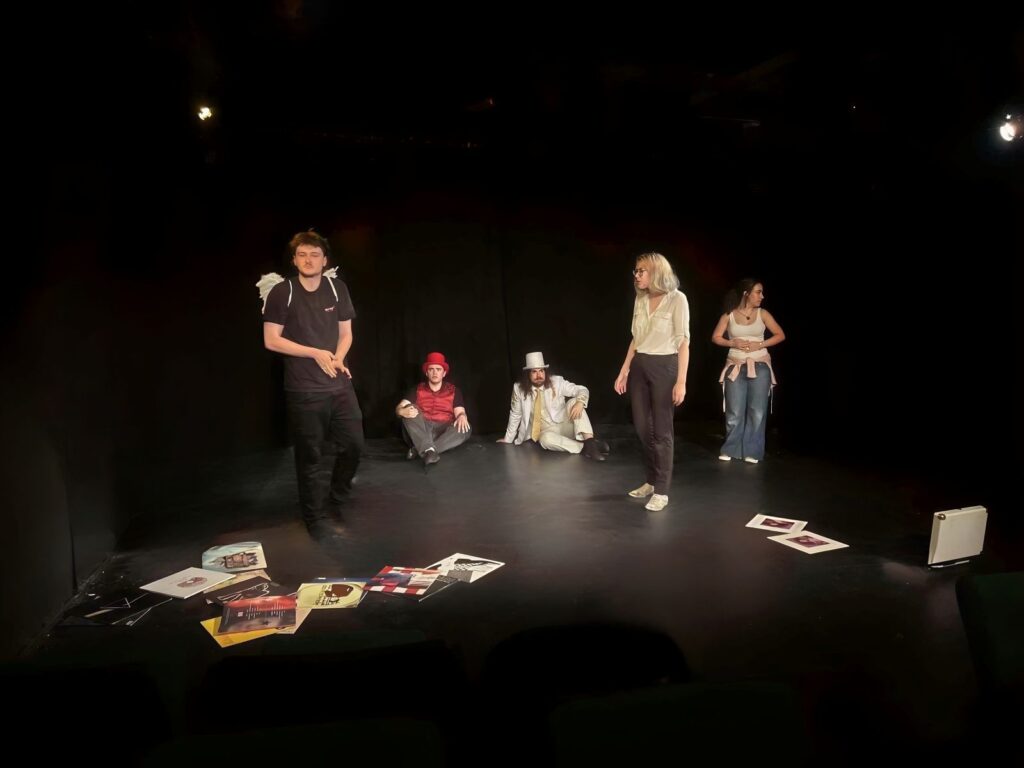
It’s definitely minimalist. I was previously part of a fringe troupe that operated on principles of Agit-Prop theatre, where everything (set, props, costume) should be able to fit into a small box. Whilst we’re not that firm, I follow the ethos that, unless something is absolutely necessary and can be transported easily, it probably isn’t worth bringing. We certainly work on almost a black box concept and props are minimal. God and the Devil are very much the stars, but are, surprisingly, often in the background. We also want God and the Devil’s costumes to really stand-out and an overly cluttered stage could minimise their impact, so overall, we just have a record player, records, a bible, a roll up bed and some chairs – that’s it.
How do you like to work with the actors, in rehearsal and during the show’s run?
Our cast is young – 19-27. Generally, when people join our company, this will be their first experience of fringe theatre, so it’s often a learning curve. I always want to be as much of a guide/support as I can, but ultimately, the actors lead me to where they need to go, and I help streamline their thoughts or offer alternatives if needed. Rehearsals are structured with exercises and scene feedback, but we do encourage actors to also feedback what they think or need. With shows, I mainly want to keep morale high and give clear, direct feedback for people to work on. Each actor is different, so the exact work I’ll do person to person will change, but overall, we largely just play around finding what works and keep it fun.
What challenges have you faced, either in development or in rehearsals?
Oh, well, as a small, independent fringe theatre company there’s a lot. We really had no idea where this show was going, or if anyone would even like it. Early on, we really struggled to cast certain roles. We constantly had to revise our tech expectations. Finding costumes that were affordable and could be replaced was a real hassle. Really, as a small company and team, we’ve constantly been adapting, changing and growing because of the realities of the work like budget and team requirements etc. However, we wouldn’t have it any other way and, I believe, it’s what makes us a strong team and so proud of where we are now because it really has been a mountain, but it’s one we’re glad we climbed and I, personally, wouldn’t have changed any of it.
What can audiences expect?
To laugh, feel plenty of twists and turns, maybe to shed a tear and to be messed with. We incorporate audience interaction into the show so be prepared to answer to God and the Devil – if you’d like to opt out, let the Devil know on entry. You’ll have opportunities to meet God and the Devil after the show – if you’re brave. We tend not to take a bow as we want our characters to stay with you. It’s a bit of a wild ride, but I promise it’s worth it. Be prepared to play, our audience is a character and please do have fun. We don’t want you to outsmart us, we want you to react genuinely (be willing to be wrong) and don’t pre-empt the story – go with your gut!
God, The Devil & Me will run at The Lion and Unicorn Theatre, in Kentish Town from January 6-10, 2026. Tickets here.
Top image: God, The Devil and Me (image supplied)