
Cassie Bradley is theatre and television actor known for screen roles on Coronation Street and Waterloo Road, as well as stage credits including King Lear at the National Theatre and Pericles with the RCA. She also has a role opposite Nicole Kidman and Sandra Bullock in new feature film Practical Magic 2.
Later this month, she will take the title role in My Name is Rachel Corrie, a play exploring the life and death of the titular American activist in Gaza.
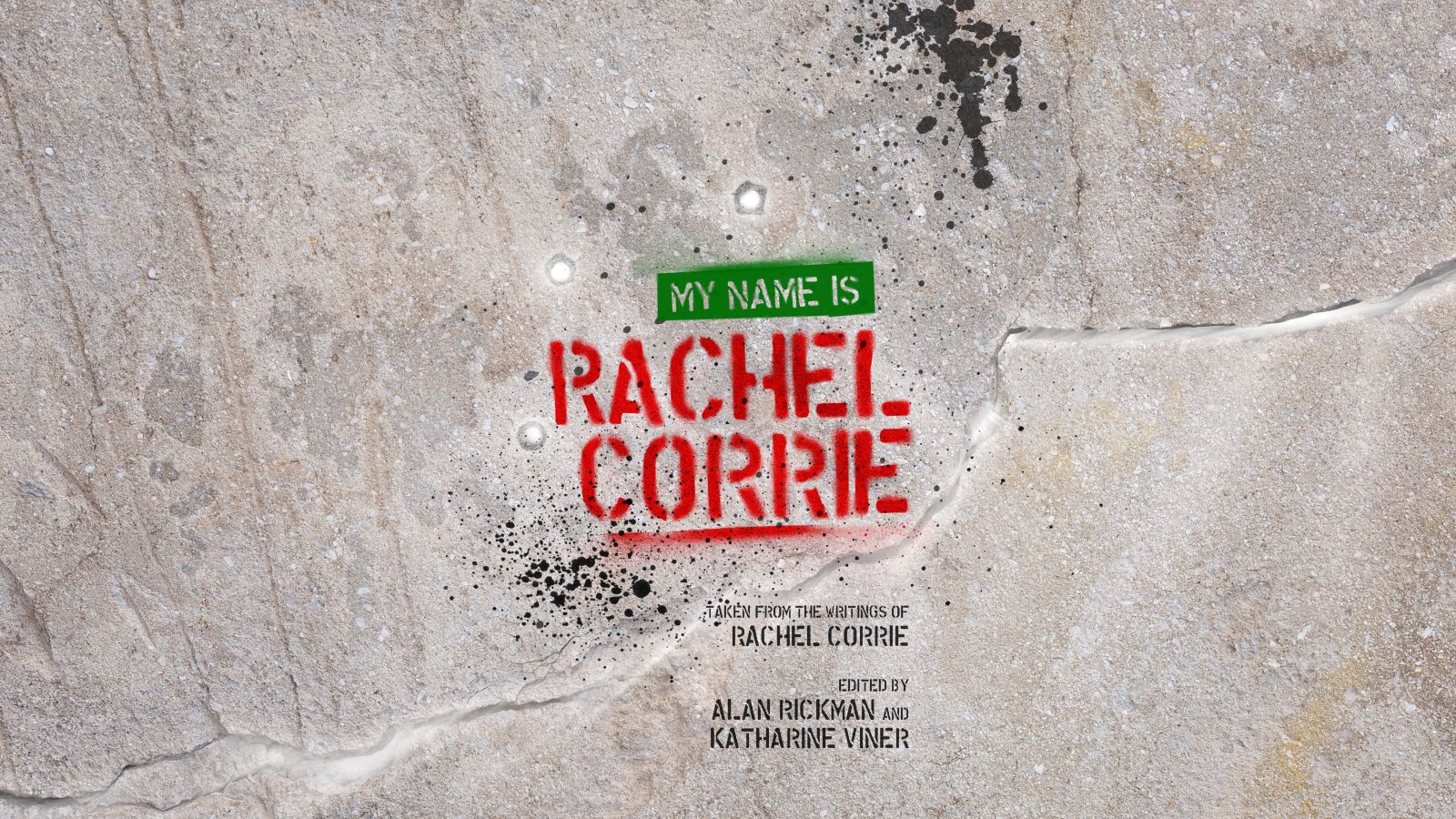
The play was compiled verbatim from Rachel Corrie’s journals and emails by Alan Rickman and Katherine Viner, and follows the American activist on her journey from suburban America to Gaza.
The show runs at Greenwich Theatre from Tuesday, September 29 – Saturday, October 17, 2026.
Here, Bradley tells The Theatre Playbook about starring in My Name is Rachel Corrie, working with director James Haddrell and why the play is described as “urgent.”
Please introduce us to My Name is Rachel Corrie.
My name is Rachel Corrie is a play that weaves together the writings, diaries and emails of activist Rachel Corrie. It’s a story of courage, spirit and what it is to be human in the face of conflict. Edited by Alan Rickman and Katherine Viner, Rachel’s words are as important and relevant today as when she wrote them. It’s an insight into the mind of an incredible young woman questioning the world around her and her place within it.
What can you tell us about Rachel and how we follow her through the story?
Rachel was an American nonviolence activist who lost her life when she placed herself between a bulldozer and a Palestinian home. Her story had a profound impact and created ripples around the world, it led to the formation of the Rachel Corrie Foundation for Peace & Justice.
This play puts the audience at the heart of Rachel’s story – in the centre of her kaleidoscopic thoughts and fragmented memories. The audience see the US, Gaza and the world through Rachel’s poetic lens as she grapples with universal ideas: the journeys we take; the impact of our actions and our responsibility to others.
What themes does the story explore?
The story interrogates identity, ideals, conflict, reportage and what it is to be human. It’s a beautiful and poetic exploration of how we navigate a fractured world.
The show has been described as “urgent.” Why is this production so timely?
Today’s fragmented global landscape of conflict and political instability means Rachel’s words and questions are so deeply relevant and deeply necessary. Minute to minute we are bombarded with images and stories depicting the human cost of conflict: through our smartphones, our screens and on 24 hour rolling news. Sometimes it feels easier to bury our fears, swallow our questions and numb our internal wrestlings than articulate them – purely in order to survive – to get us through the day. This show is urgent and necessary because it cracks open these internal struggles and gives voice to what so many of us are thinking and feeling beneath our instinct to survive.

How familiar were you with Rachel’s story and what research have you done for the role?
Rachel’s story is one I’ve known for a long time and I’m honoured to have the opportunity to tell it onstage. It is a privilege to sit with her profoundly brilliant and beautiful writings. I love doing research and immersing myself in the world of any character I portray.
I’ve been reading Let Me Stand Alone: The Journals of Rachel Corrie, watching footage of Rachel and interviews with her family, reading eye witness testimonies and on a macro-level: researching the complex history of Israel-Palestine and examining the landscape of the US in the 80s/90s in Rachel’s formative years.
How did you land the part of Rachel?
I worked with James Haddrell (director) on the Nick Payne play One Day When We Were Young at The Park Theatre last year and loved working with him. His work is so thoughtful, nuanced and brilliantly detailed. I’d read My Name Is Rachel Corrie years ago but it really stuck with me and I was deeply passionate about bringing Rachel’s story to the stage so I approached James and Greenwich Theatre to collaborate and they said yes.
What were your first thoughts on the project when you read the script?
When I read the script I had such a passionate gut reaction to it – I had an unshakable conviction that this story needed to be told and experienced again onstage (the original production debuted at The Royal Court in 2005).
The power of theatre is that it provides us with a space to experience. With this play Rachel’s story isn’t printed in a newspaper or presented in a documentary; audiences have the opportunity to live and breathe her thoughts, words, poems and dreams. Theatre is an incredible form to work in.
What kind of prep work do you do before a new show?
Before any new project I try to do as much preparation as possible: research, voice work, accent work, and movement work so that I can step into rehearsals in a state of readiness with ideas, thoughts and energy, ready to collaborate.
Can you describe creating the character of Rachel? How close to real life might it be?
Something James and I spoke about very early on in the rehearsal process was our shared desire not to present an imitation of Rachel Corrie. We want to bring her words, her ideas, her wit and her beautiful perspectives to life. Our shared research and knowledge of Rachel will, of course, deeply inflect this but we’re focusing on her deeply relatable human qualities; her passion, courage and intellect, her fears and anxieties, her wit, her endless questions…
How are you working with director James Haddrell ahead of the show?
I love collaborating with James. We’ve been sharing ideas, plans, useful literature and research ever since we decided to do this together. We have a long WhatsApp chain of “Rachel Corrie thoughts…” It’s brilliant to have someone you deeply trust as a collaborator – James creates such a brilliant environment to explore ideas, to “fail again, fail better” in, a rehearsal space that is playful, joyous and full of possibility.
How do you compare being on stage with your screen work? Do you have a preference?
I love to act, whether that’s on stage, on screen in TV & Film or on audio projects (radio, audiobooks and voice over). I love to tell stories and jump into different worlds and I feel privileged to do it across different forms.
I love the immediacy and intensity of theatre, the possibility that anything can happen and how a story shifts and evolves over the course of a theatrical run. I also love the collaboration involved in a rehearsal process. I’m so excited to bring My Name Is Rachel Corrie to the stage.
What do you hope audiences take from the production?
I hope audiences will enjoy the experience of being at the centre of Rachel’s kaleidoscopic mind, I hope they will connect and engage with her story and her deeply human hopes, fears and ideals, and I hope that this production gives audiences a space to sit with the difficult, challenging questions that we all face in our world today. This play constantly reminds me that there are no easy answers or solutions but we need to ask the questions, speak our truths and allow others to do the same.
“We have got to understand that they dream our dreams, and we dream theirs” – Rachel Corrie
My Name is Rachel Corrie runs at Greenwich Theatre from Tuesday, September 29 – Saturday, October 17, 2026. Tickets here.
Top image: My Name is Rachel Corrie artwork (image supplied)