
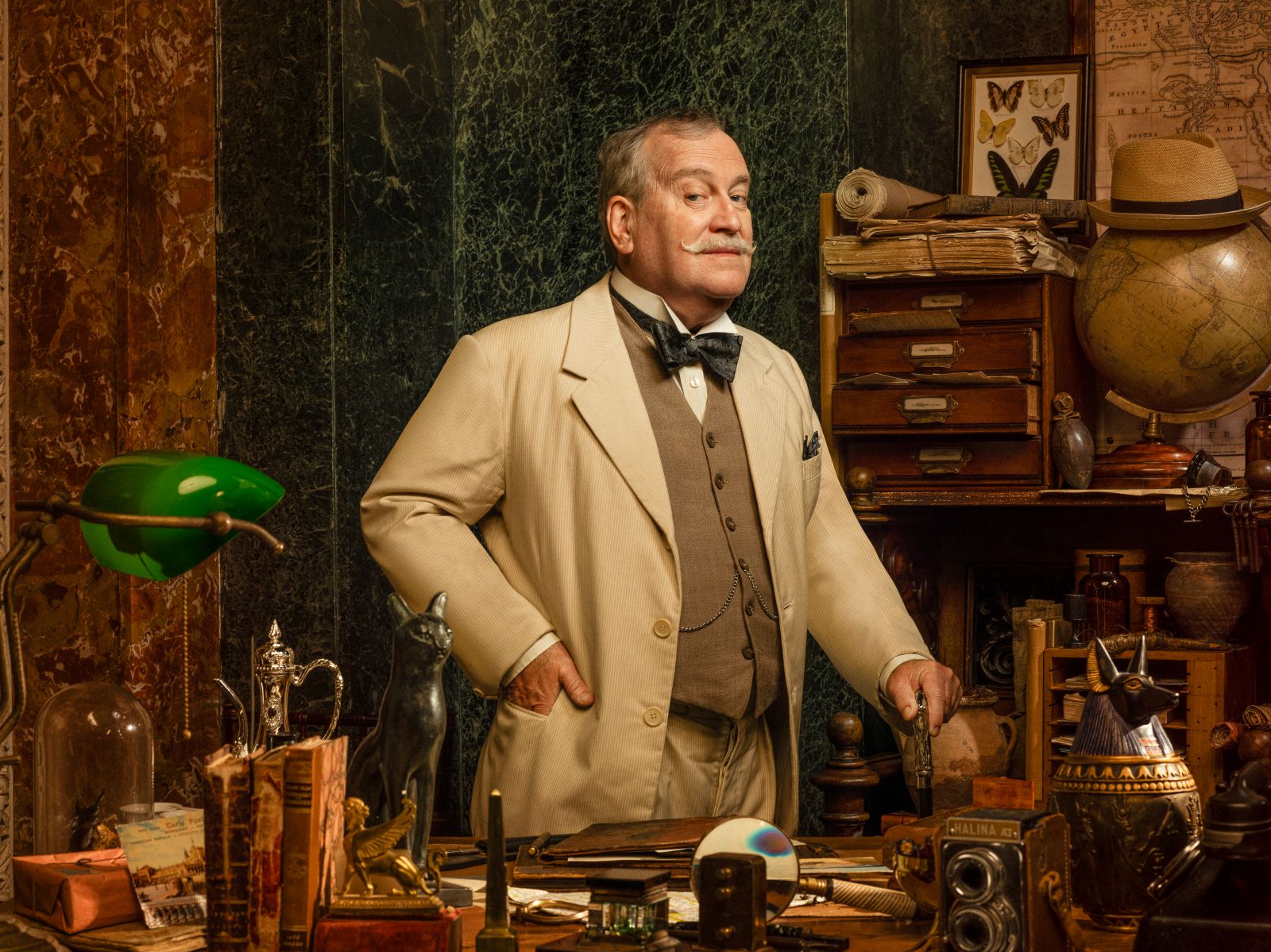
Playwright Ken Ludwig speaks to The Theatre Playbook about bringing Death of the Nile to the stage, adapting Agatha Christie and his take on the Queen of Crime’s iconic detective Hercule Poirot.
As part of a UK tour, a new production of Agatha Christie’s Death on the Nile comes to Richmond Theatre this October.
On board a luxurious cruise under the heat of the Egyptian sun, a couple’s idyllic honeymoon is cut short by a brutal murder. As secrets that have been buried in the sands of time finally resurface, can the world-famous detective, Hercule Poirot, untangle the web of lies and solve another crime?
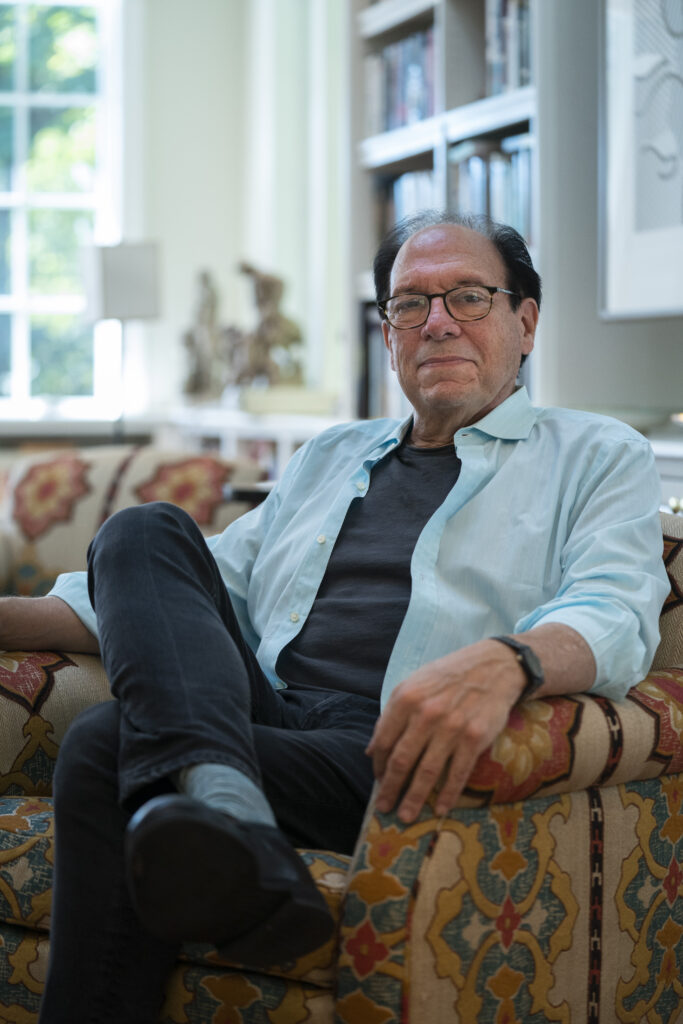
Christie’s novel is adapted for the stage by Ken Ludwig, who previously wrote the script for a stage version of Murder on the Orient Express.
He is also known for Crazy for You and Lend Me a Tenor, and is described as one of the most performed playwrights of his generation. He has had six productions on Broadway and eight in the West End. His 34 plays and musicals are staged throughout the US and around the world in more than 20 languages in more than 30 countries.
Death on the Nile is directed by Lucy Bailey, with Mark Hadfield as Hercule Poirot.
Here, Ludwig tells The Theatre Playbook about tackling Death on the Nile, his writing process and how he likes to be involved in all aspects of a show.
After Murder on the Orient Express, why did you choose Death on the Nile for your next Agatha Christie adaptation?
Death on the Nile is the other sparkling jewel in the Poirot canon. How could I resist it?
What’s your approach to adapting a novel for the stage? Was this any different?
The process is the same for all my plays: figure out the heart of the story and try to understand what it’s really about. Not what every beat of the plot it, but who the characters are, what they want, and how they work to get it. With an adaptation, a lot of that is already there in the source material, but to streamline a novel into a two-hour play that really ticks along, I have to keep very focused on telling the story clearly. This was a special challenge with Death on the Nile because the mystery is so complicated.
Does Death on the Nile lend itself to being adapted for a theatre production?
It’s a challenging story to bring to the stage – the plot is complex and since it’s virtually all set on a boat, the designers have to be very creative. But I think it’s been worth the work. I’m very proud of this play.
Is there a secret to adapting Agatha Christie? Were there any lessons you applied from Murder on the Orient Express?
I think what really makes both plays work is that when I started writing each, I kept asking myself why this case in particular mattered to Poirot — why it wasn’t just another murder mystery to solve, but a case that affected him on a human level. Agatha Christie provided intricate, dazzling plots, and to make these plays work, I wanted to be sure they also had real heart.
How do you try to inject your own style into an adaptation?
I write comedies. That’s my heart and soul. So even though Christie’s world is full of schemers and killers, audiences can expect to laugh.
What’s your writing process?
I’m old-fashioned — I sit down in my comfiest chair with a pencil and a legal pad and scribble, scribble, scribble. When I’ve plotted out my play and know who the characters are and what they want, I start writing the first scene. I usually have about 50 pages of notes before I write the first line of dialogue.
How faithful is your adaptation, and where have you taken any creative licence?
The central mystery is there as, of course, is Poirot in all his genius. Many of the surrounding characters and their stories are different, sometimes to tell a clearer, more economical story, and sometimes because I felt the play needed more shade of lightness and hope to balance its darkness.
Were there any challenges or hurdles in the adaptation process?
The play has gone through several phases of writing, rewriting, workshopping and more rewriting. But I wouldn’t necessarily call those hurdles. They’re just steps in getting a play right.
How would you describe your Hercule Poirot, and why was Mark Hadfield the perfect actor to play him?
My Poirot is quirky and brilliant. We love to be around him and love to watch his little grey cells in action. Mark is just right for the part: he’s a meticulous actor with a quick wit and a keen mind—he is Poirot!
How are you working with director Lucy Bailey on the production?
I love working with Lucy. We worked together on the recent tour of Murder on Orient Express, and I couldn’t be more pleased to team up with her again on this production. Lucy gets the best from her cast and she has such a clear vision for her work. She infuses every moment with a depth that enriches the text.
Are you involved in other aspects as well?
I’m always very hands-on with new plays. I rewrite like crazy because a play isn’t finished until the critics are in their seats on opening night. I attend the first several days of rehearsal so I can get to know the actors and get their input as I revise the script, and I return for all the previews, often staying up late into the night to make improvements based on the audience’s reaction to the show.
What can audiences expect from Death on the Nile?
They can expect an immersive night of theatre full of laughter, beauty and mystery.
What are you working on next?
I’m currently workshopping my next original comedy, Adults at Play and my next musical, Irving Berlin’s Easter Parade, based on the Fred Astaire-Judy Garland film. And I’m always writing a new play!
Death on the Nile plays Richmond Theatre from October 7-11, 2025. Tickets here.
Top image: Mark Hadfield as Poirot in Death on the Nile, credit Jay Brooks (image supplied)